
Winter Newsletter – 2026

Students Inform Local Response to Homelessness

This fall, courses led by UI faculty and partners immersed students in the local response to homelessness. Students in Long Le’s Microfinance for Entrepreneurial Development, Sonja Mackenzie’s Senior Public Health Capstone, and Brie Mendoza’s Unhoused Advocacy Clinic worked directly with our unhoused neighbors and researched opportunities for local change.

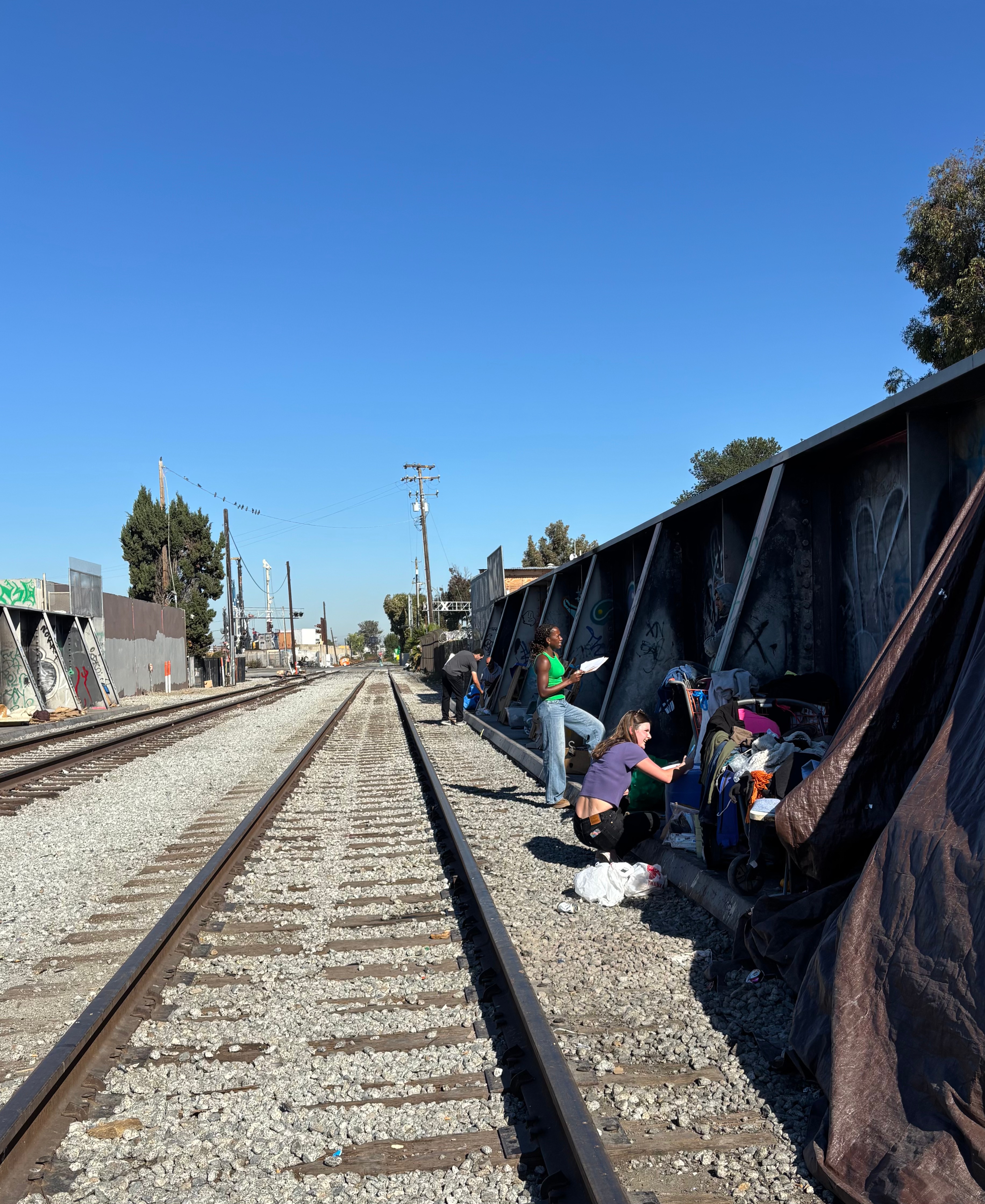
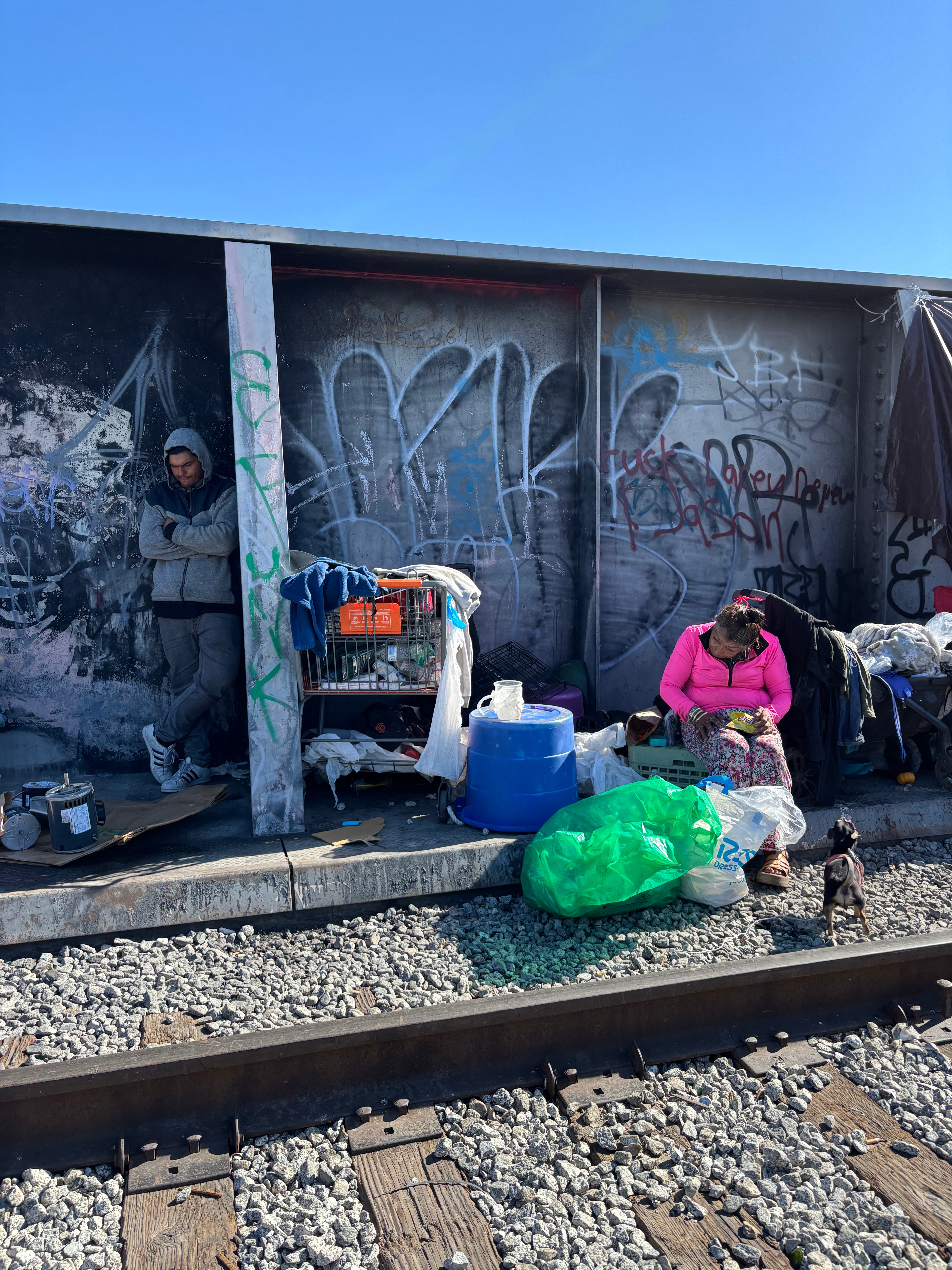
A student speaks to a resident of a homeless encampment adjacent to railroad tracks.
Credit: S. Mackenzie

Capstone students took on two projects. Utilizing a “Wellness Audit,” one group examined the impacts of displacement while unhoused, collecting surveys at a variety of community sites. In partnership with the Law Foundation of Silicon Valley and the Gilroy Union of the Homeless, their findings will inform local advocacy addressing encampment sweeps. A second group of Capstone students assisted people with claims for lost, damaged or destroyed property arising out of abatements, supporting the Unhoused Advocacy Clinic’s work. A recorded presentation of each group’s findings is available here.

Logo for the ZiM program. An image of earth with ZIM written across.

Management students developed a “Zero Interest Microfinance” program for people experiencing homelessness which includes microloans and financial literacy training. People experiencing homelessness are also invited to invest in the program. A ZiM pilot is expected to launch this winter.

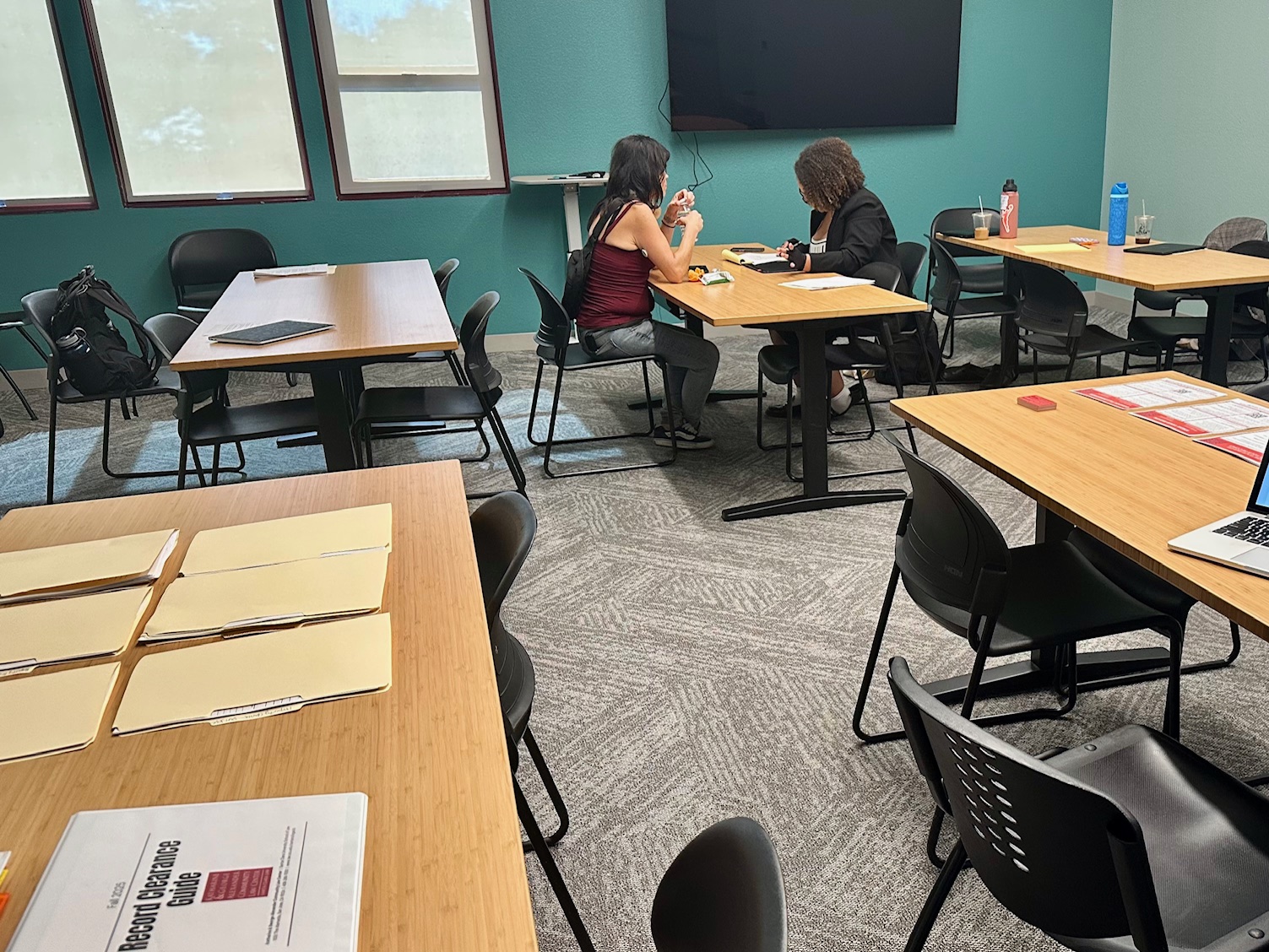
A law student meets with  a client in a room with multiple tables.
Credit: B. Mendoza

Through the Unhoused Advocacy Clinic, law students assisted clients with court fines and fees, property claims and record clearance matters. The students staffed six legal clinics in the community during fall semester, serving nearly 60 people who have been impacted by the criminalization of homelessness.

Of note, the three courses worked collaboratively, increasing their projects’ impact and bolstering community connections. People who needed assistance with a property claim, for example, could also respond to the Wellness Audit and learn about the ZiM program. Students also supported the work of community partners with service hours, research contributions and community education.

Campus education and community partnership are pillars of the Unhoused Initiative’s work. We congratulate the students’ on their commitment and impact this fall!

Join us this winter

Watch for upcoming details about these events and projects …

Credit: S. Mackenzie
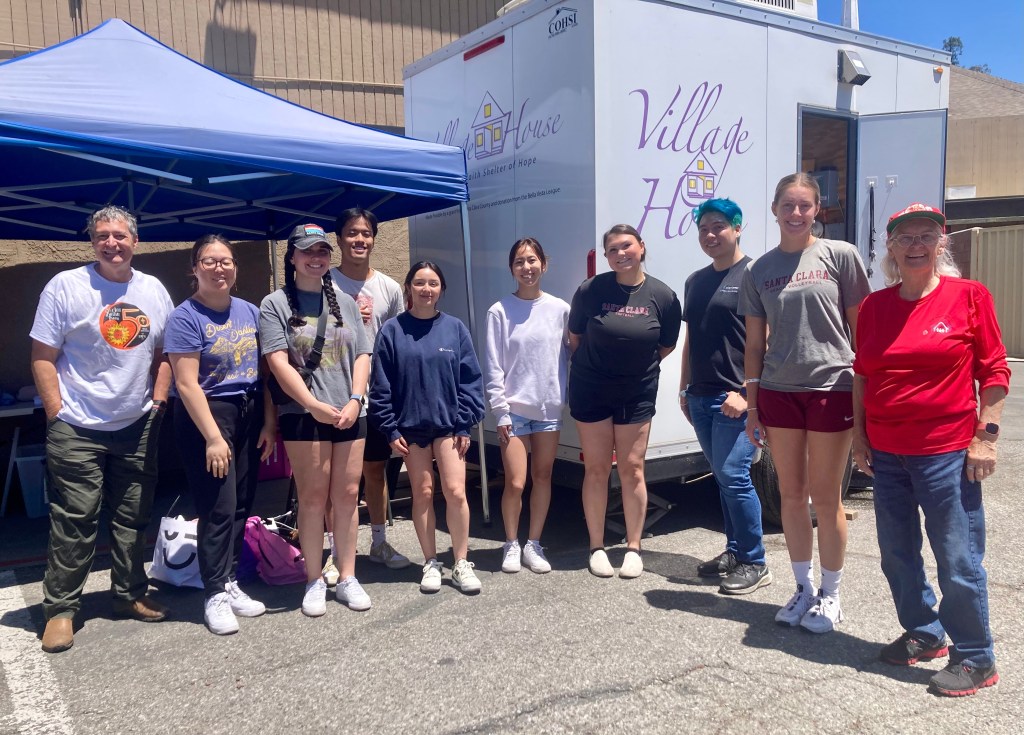
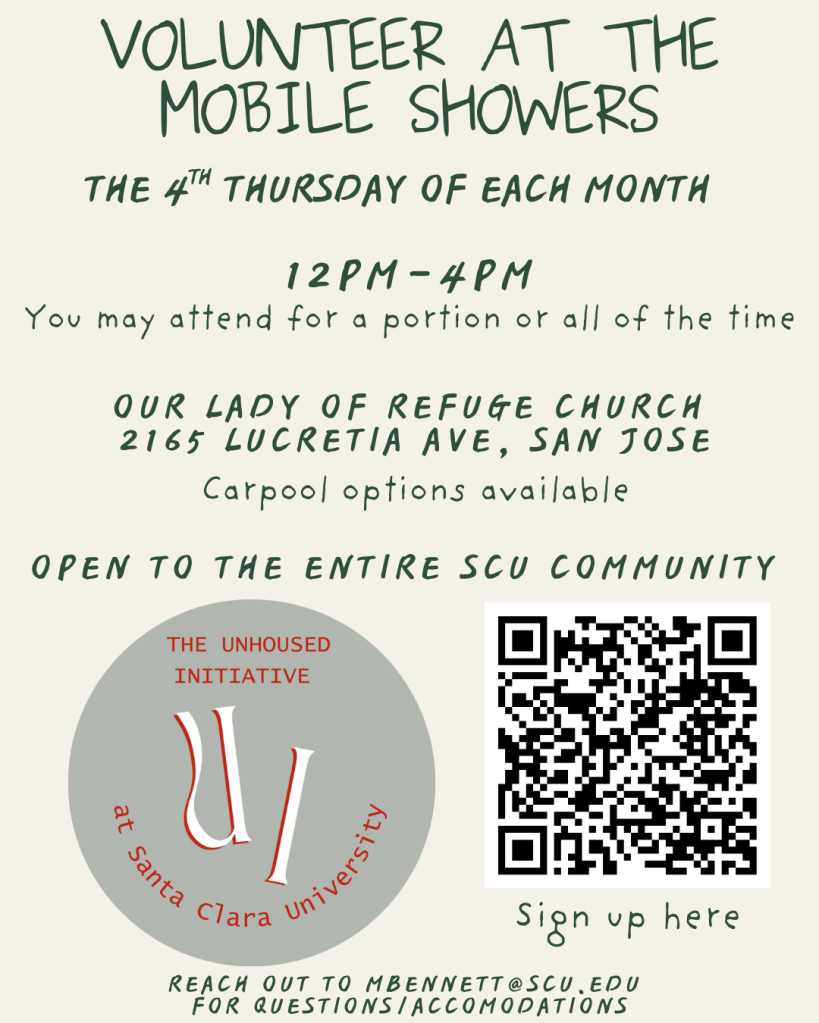
  • Mobile Showers – Join us for a monthly service event at the showers on the 4th Thursday of the month. Open to all of the SCU Community. Click here to sign-up or email unhousedinitiative@scu.edu for more info!
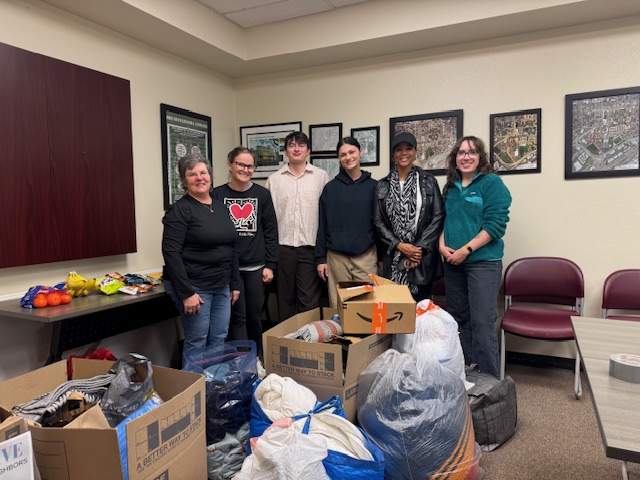
  • Winter Supply Drive: Jan. 21 – Jan. 30. Click here for drop-off locations, suggested items, & info for a service event Jan 30! Items will be delivered to guests and clients or local homeless service providers.
  • HEART Talk – SCU Alum, Jose Lujano, ‘14, joins us on February 04 at 4:30pm to discuss his career in advocacy for, and development of, affordable housing in Santa Clara County.

Did you know?

Quick facts about housing & homelessness in Silicon Valley

two people pictured in their encampment adjacent to railroad tracks.
Credit: S. Mackenzie
  • According to the latest count, 10,711 Santa Clara County residents are experiencing homelessness.
  • Economic reasons, such as increasing costs of housing and loss of employment, are the primary causes and drivers of homelessness in Santa Clara County.
  • Participants in Santa Clara County Permanent Supportive Housing programs have a 95% success rate in maintaining housing.

You can learn more on Destination: Home’s website.

Basic Needs on Campus

Nearly one-quarter of SCU students experience housing insecurity according to the annual Basic Needs Survey. If you need support to maintain your housing, access food, obtain health insurance or meet a transportation or technology need, help is available. Use this form to contact SCU’s Basic Needs Office for assistance.

Further reading …

Articles, podcasts and news related to the homelessness crisis publish nearly every day. These are stories we recommend.

  • The Guardian – A welcome pit-stop: the US university using parking lots to help unhoused students
  • SJSU – 2025 Silicon Valley Pain Index
  • NYT – The housing strategy that has California NIMBYs in a corner
  • Mercury News – From NIMBY to YIMBY

More information on January events …

Congratulations ’24-’25 Faculty Grantees

The Unhoused Initiative is excited to announce our 2024-2025 Faculty Research Grant awardees. This year, we selected five projects- four original proposals and one UI-developed proposal in partnership with the Santa Clara Police Department. Despite the severity of the crisis in the Silicon Valley, there is a lack of research related to local homelessness. Through faculty research grants, we hope to bridge this gap to inform local policy and programs. Continue reading below for more information about this year’s selected grantees and their projects.

Dosun Ko, Assistant Professor in Santa Clara’s School of Education & Counseling Psychology will address how the intersections of race, disability status, and homelessness contribute to disparities in school discipline, absenteeism, and juvenile justice involvement, with particular attention to marginalized student populations. The study will employ Quantitative Critical Race Theory to explore the systemic inequities that affect students of color with disabilities who also experience housing instability. Professor Ko will collaborate with local organizations, such serving these student populations to co-develop policy recommendations that will inform local educational interventions.

Micah Lattanner, Assistant Professor in Public Health, seeks to assess the impact of Permanent Supportive Housing (PSH) on health outcomes and identify predictors of PSH retention—providing valuable insight into “for whom” and “under what conditions” PSH is most effective in enhancing health and continued residence in PSH. The study, titled Who Stays in? A Longitudinal Study of Individual and Social Factors Predicting Long-Term Retention in Permanent Supportive Housing and Health Outcomes, utilizes data from Santa Clara County’s Valley Homeless Healthcare Program and is in partnership with Santa Clara County’s Behavioral Health Department, as well as Unhoused Initiative affiliate faculty, Dr. Jamie Chang.

Naomi Levy, Professor of Political Science, will focus on the impacts of local organizations that serve people experiencing homelessness. Her project will employ the Firsthand Framework for Policy Innovation’s structured research process to generate “bottom up” indicators of program impact of three homeless service organizations. The study’s findings will be used to evaluate programming and inform funding decisions to maximize impact beyond traditional outcome measures. Professor Levy will use her grant funds to support SCU student researchers working on the project.

Bill Sundstrom & Michael Kevane, both professors of Economics in SCU’s Leavey School of Business, will dedicate their Winter and Spring 2025 Santa Clara Urban Issues Research Lab (SCUIRL) courses to an Unhoused Initiative developed project in partnership with the Santa Clara Police Department (SCPD). The project, titled Data Wrangling, Visualization, and Analysis of Data Provided by Santa Clara Police Department on Calls and Police Responses Related to Permanent Supportive Housing (PSH) Sites, will evaluate SCPD data related to calls for service at PSH sites to identify patterns and trends. The data analysis will be utilized to inform recommendations for allocation of services and resources. The study will also provide Professor Sundstrom and Kevane’s students with training in spatial data analysis and community-partnered projects.

Tim Urdan, Professor of Psychology, will study the what local schools, government agencies and community organizations are doing to support the academic success or unhoused students. He will also interview the parents/guardians of unhoused students to obtain their insights about how well their students’ needs are being met and what more they believe could be done to better support their children. Professor Urdan will use the resulting data and analyses to create recommendations for how local schools, organizations and agencies can better meet the needs of unhoused students.

Honoring Our Unhoused Neighbors

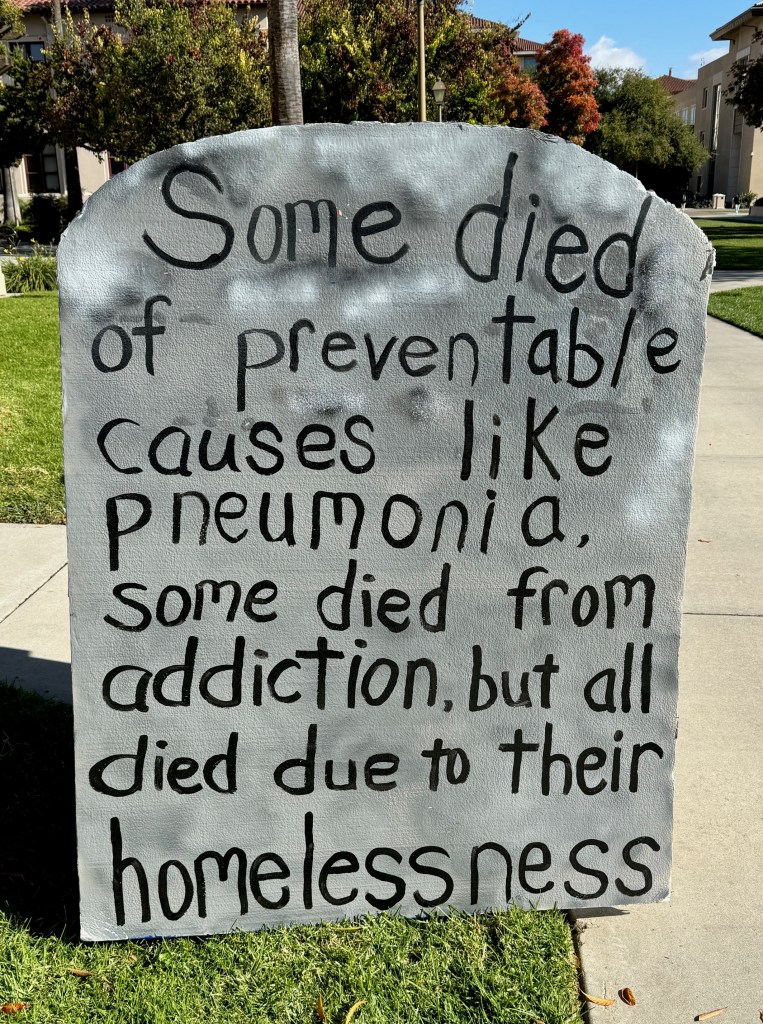
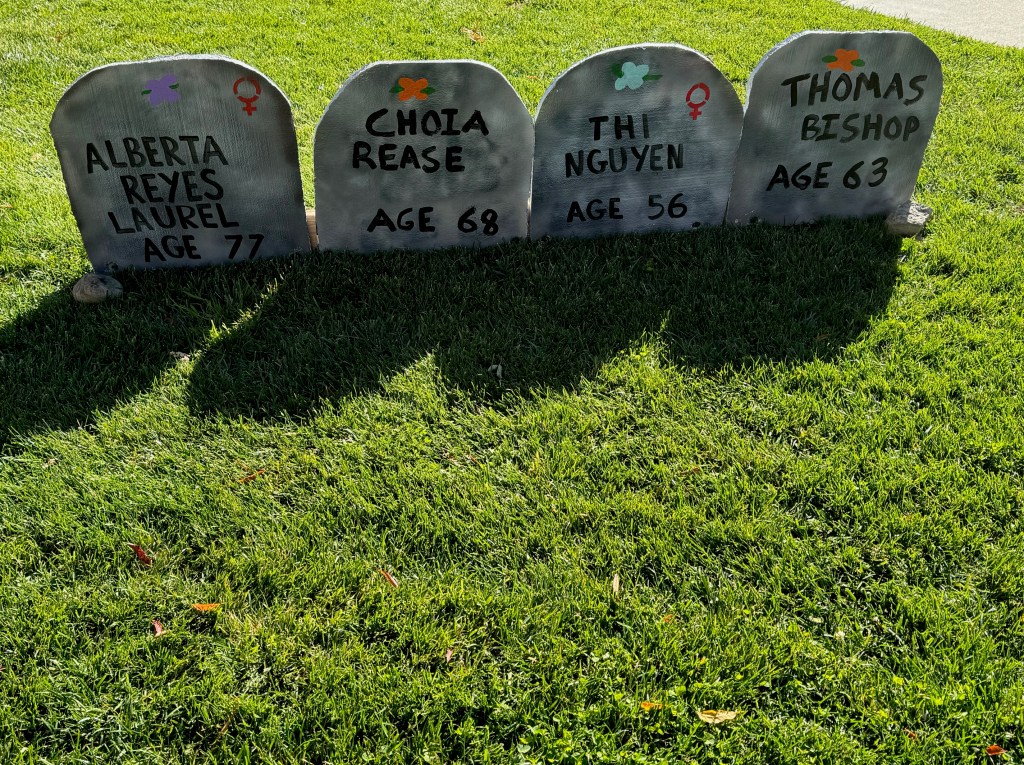
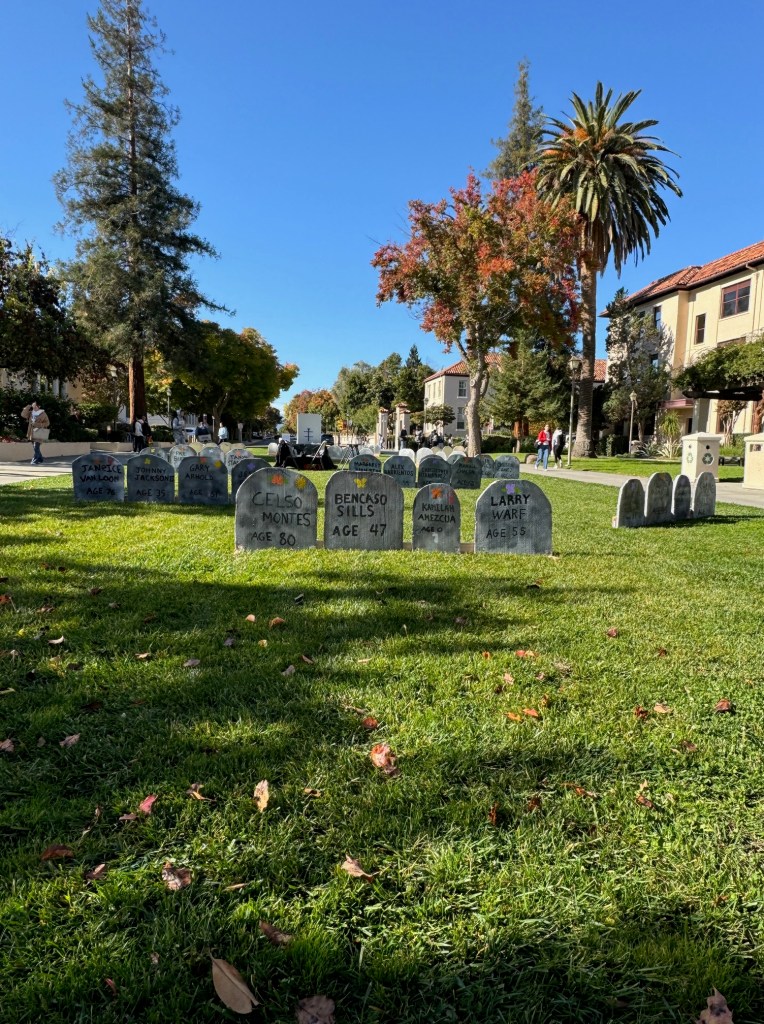
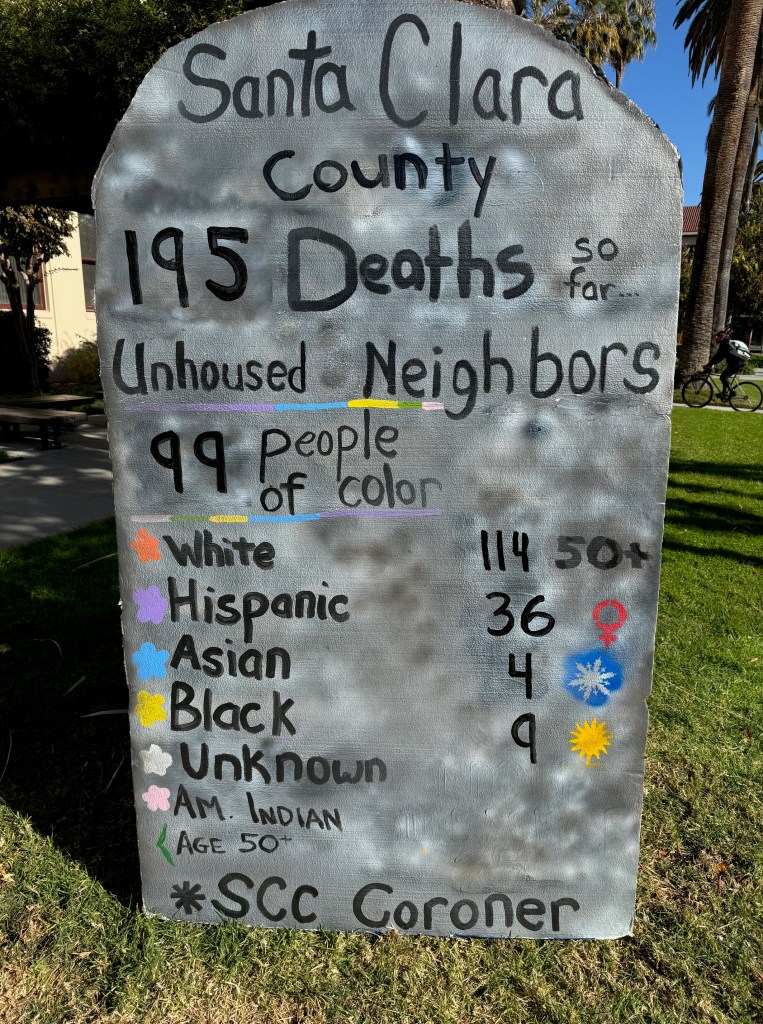
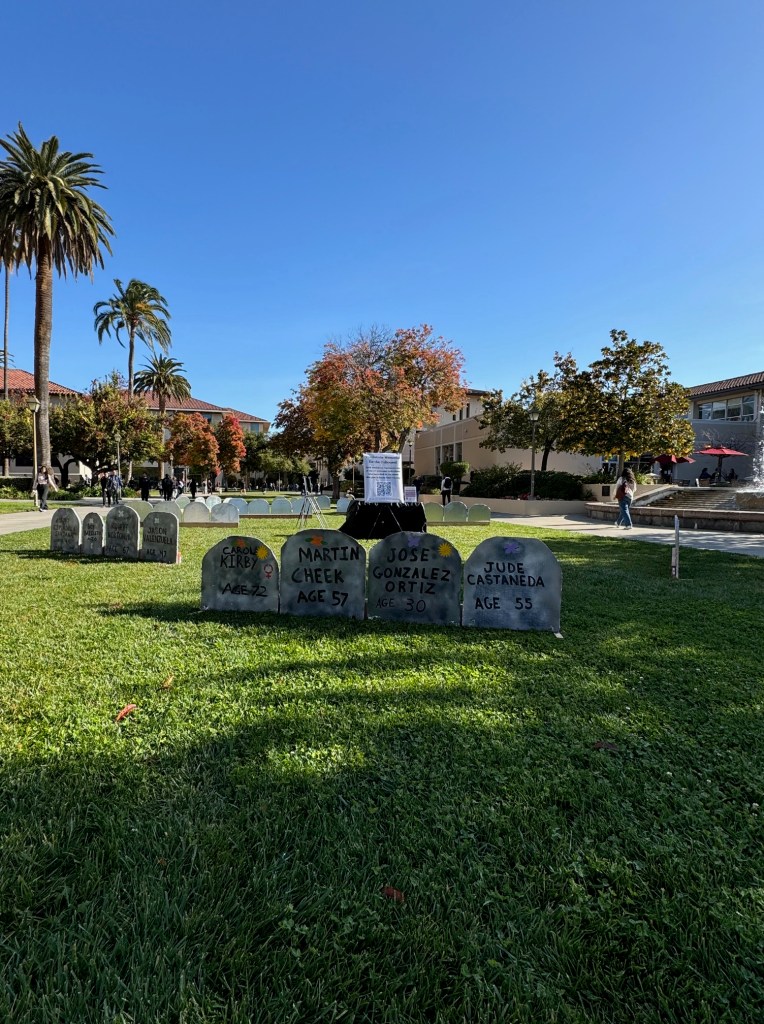
On November 18 and 19, the Unhoused Initiative hosted an outdoor art display of the Tombstone Memorial for our unhoused neighbors who died on the street in Santa Clara County this year. Each year, local activist, Shaunn Cartwright, makes a tombstone for each person who died while homeless in the County. A representative sample of the current 195 deaths this year (as of Nov. 18, 2024) were on the Kenna/Benson lawn to raise awareness on campus about homelessness and homeless mortality. It was also an opportunity to acknowledge the 10th anniversary of the sweep of The Jungle in San Jose – one of the largest encampments in the country at the time.

A noontime panel complemented the tombstone display. The panel discussed homeless mortality and the health and safety impacts of encampment sweeps. It was also a reflection on the sweep of the Jungle in 2014 and the community that resided there. Panelists included Shaunn Cartwright, creator of the Tombstone Memorial project, Robert Aguirre, member of the Gilroy Homeless Union, Todd Langton, Executive Director of Agape Silicon Valley, and Unhoused Initiative faculty member, Professor Boo Riley. The panel was the first in a year-long series examining encampment sweeps, past, present and future.

Click here for more information about the Tombstone Memorial, the Jungle, and our panelists.

Amicus Brief filed in Grants Pass v. Johnson

Unhoused Initiative founding member and affiliated faculty, Jamie Chang, PhD, recently contributed to an Amicus Brief filed with the U.S. Supreme Court in the upcoming Grants Pass v. Johnson case. The Brief is filed in support of Gloria Johnson and explains the harms of anti-homeless laws on people experiencing homelessness and on their ability to return to housing. It also argues the ineffectiveness of anti-homeless laws as they do not reduce homelessness, and that municipalities are not left without other options to address the homelessness crisis.

The case will examine whether a municipality can criminalize sleeping in public when alternate shelter is not available. The case could have major impacts on the criminalization of homelessness in the United States.

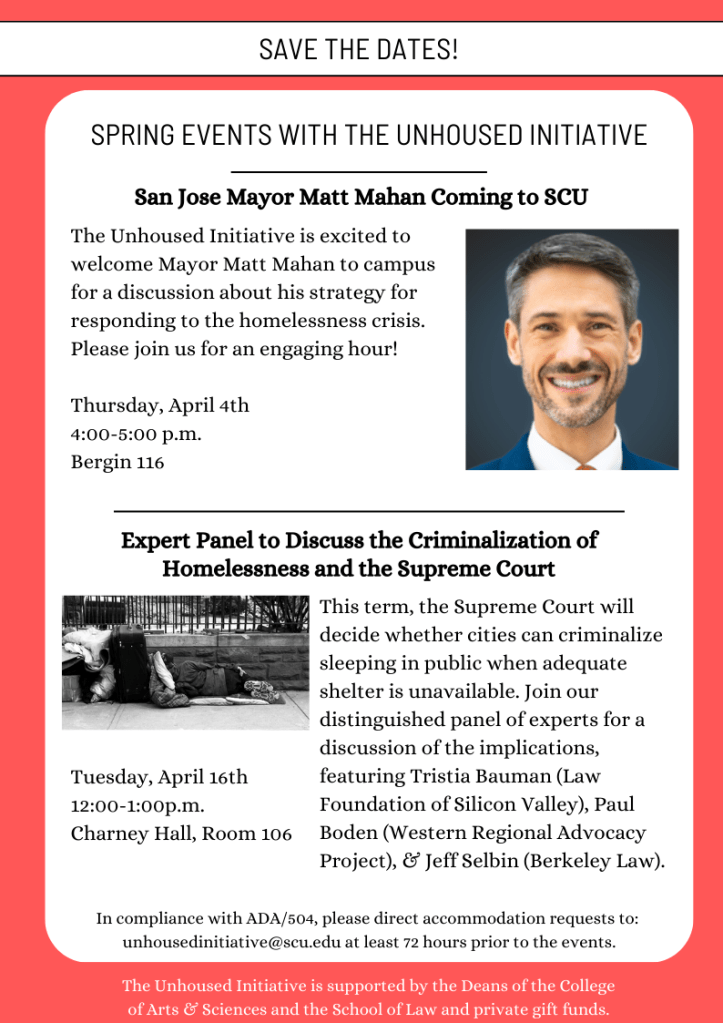
Arguments in the case will take place on April 22nd. The Unhoused Initiative is hosting a panel discussion on the case the week prior, April 16th, at Noon. You can find more information about and register for the event here.

Dr. Chang’s brief is available for viewing in the Articles & Research folder of the Unhoused Initiative’s Online Resource Bank.

Challenge to Martin v. Boise heads to the Supreme Court

Since the 2018 Ninth Circuit decision in Martin v. Boise, west coast cities have been barred from prohibiting sleeping in public spaces when adequate shelter is not available for their unhoused residents. The Court found that criminalizing camping on public property is cruel and unusual punishment, in violation of the 8th Amendment, when there is nowhere for the people in question to legally sleep. Earlier in January, the Supreme Court of the United States agreed to hear City of Grants Pass, Oregon v. Gloria Johnson, et. al. and is expected to provide opinion on whether cities can legally ban or limit camping in public spaces by people experiencing homelessness.

According to a recent CalMatters article, The Boise decision has frustrated lawmakers who claim the ruling prevents them from limiting the spread of encampments and from conducting sweeps they say are necessary for health and safety. Advocates for the unhoused, on the other hand, argue that legislators are overreacting and that the Boise case does not prevent them from regulating encampments. Advocates also feel that the Boise decision is clear and municipalities cannot ban sleeping outside when adequate shelter does not exist for people experiencing homelessness.

As reported by CalMatters, since the Boise decision, subsequent court decisions have resulted in “a patchwork of interpretation across [California] on what qualifies as the ‘adequate shelter’ cities must provide before sweeping homeless camps.” The Grants Pass case could provide some clarity on this issue as well as other questions about the limits of Boise. For example, can cities impose time or location restrictions on sleeping outside; whether a City must have adequate shelter available for every unhoused person no matter what or only on days of a sweep; and, whether cities can criminalize sleeping in public spaces for those who refuse to accept the shelter offered to them.

As quoted in CalMatters, Berkeley law professor Jeffrey Selbin predicts that the Supreme Court will not try to “micromanage” the situation. Instead, he predicts the conservative majority Court will overturn the 2018 Boise decision, thereby permitting cities to widely criminalize encampments.

The Unhoused Initiative will be monitoring this case as it progresses at the Supreme Court and will report any updates as they are released.