
Events & Updates
Congratulations ’24-’25 Faculty Grantees
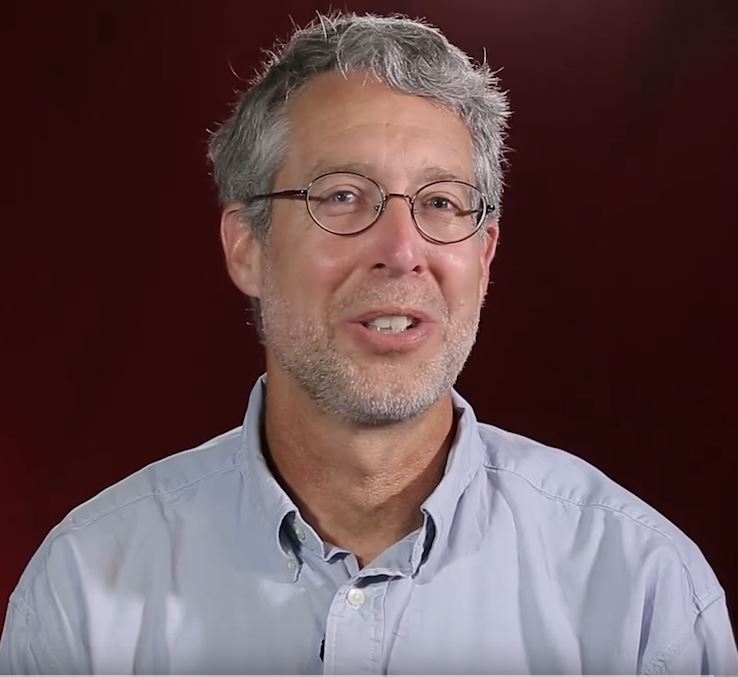


The Unhoused Initiative is excited to announce our 2024-2025 Faculty Research Grant awardees. This year, we selected five projects- four original proposals and one UI-developed proposal in partnership with the Santa Clara Police Department. Despite the severity of the crisis in the Silicon Valley, there is a lack of research related to local homelessness. Through faculty research grants, we hope to bridge this gap to inform local policy and programs. Continue reading below for more information about this year’s selected grantees and their projects.
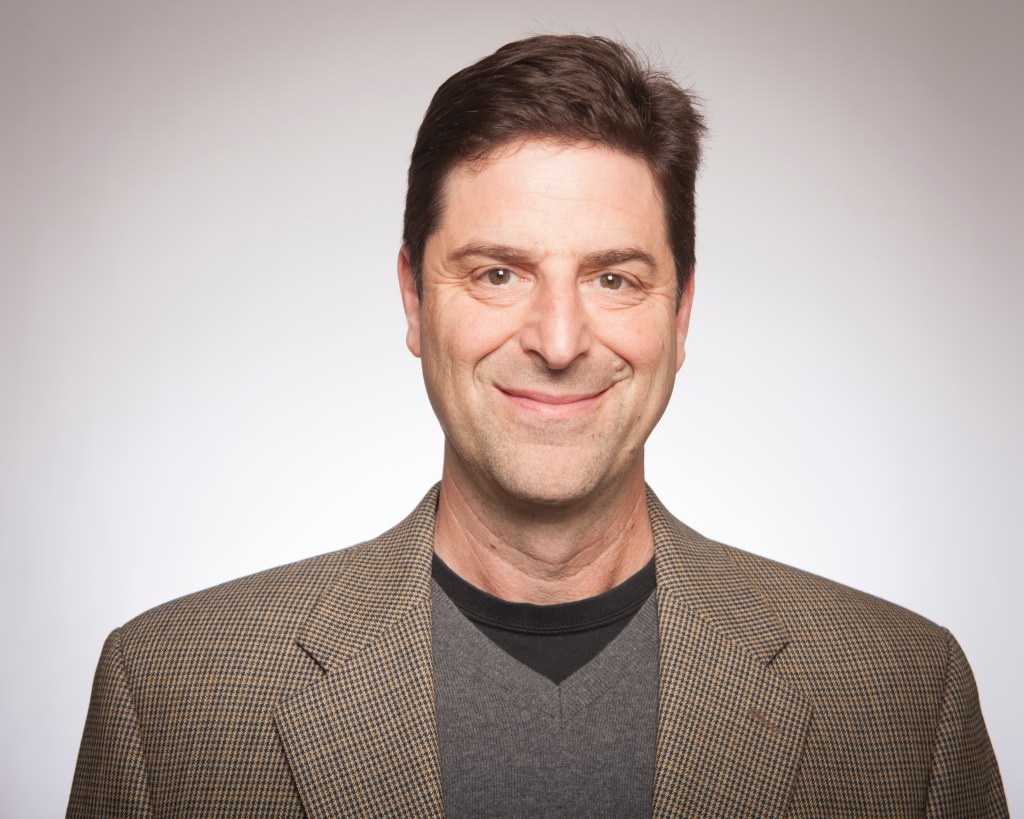


Dosun Ko, Assistant Professor in Santa Clara’s School of Education & Counseling Psychology will address how the intersections of race, disability status, and homelessness contribute to disparities in school discipline, absenteeism, and juvenile justice involvement, with particular attention to marginalized student populations. The study will employ Quantitative Critical Race Theory to explore the systemic inequities that affect students of color with disabilities who also experience housing instability. Professor Ko will collaborate with local organizations, such serving these student populations to co-develop policy recommendations that will inform local educational interventions.
Micah Lattanner, Assistant Professor in Public Health, seeks to assess the impact of Permanent Supportive Housing (PSH) on health outcomes and identify predictors of PSH retention—providing valuable insight into “for whom” and “under what conditions” PSH is most effective in enhancing health and continued residence in PSH. The study, titled Who Stays in? A Longitudinal Study of Individual and Social Factors Predicting Long-Term Retention in Permanent Supportive Housing and Health Outcomes, utilizes data from Santa Clara County’s Valley Homeless Healthcare Program and is in partnership with Santa Clara County’s Behavioral Health Department, as well as Unhoused Initiative affiliate faculty, Dr. Jamie Chang.
Naomi Levy, Professor of Political Science, will focus on the impacts of local organizations that serve people experiencing homelessness. Her project will employ the Firsthand Framework for Policy Innovation’s structured research process to generate “bottom up” indicators of program impact of three homeless service organizations. The study’s findings will be used to evaluate programming and inform funding decisions to maximize impact beyond traditional outcome measures. Professor Levy will use her grant funds to support SCU student researchers working on the project.
Bill Sundstrom & Michael Kevane, both professors of Economics in SCU’s Leavey School of Business, will dedicate their Winter and Spring 2025 Santa Clara Urban Issues Research Lab (SCUIRL) courses to an Unhoused Initiative developed project in partnership with the Santa Clara Police Department (SCPD). The project, titled Data Wrangling, Visualization, and Analysis of Data Provided by Santa Clara Police Department on Calls and Police Responses Related to Permanent Supportive Housing (PSH) Sites, will evaluate SCPD data related to calls for service at PSH sites to identify patterns and trends. The data analysis will be utilized to inform recommendations for allocation of services and resources. The study will also provide Professor Sundstrom and Kevane’s students with training in spatial data analysis and community-partnered projects.
Tim Urdan, Professor of Psychology, will study the what local schools, government agencies and community organizations are doing to support the academic success or unhoused students. He will also interview the parents/guardians of unhoused students to obtain their insights about how well their students’ needs are being met and what more they believe could be done to better support their children. Professor Urdan will use the resulting data and analyses to create recommendations for how local schools, organizations and agencies can better meet the needs of unhoused students.
UI Welcomes New Faculty
The Unhoused Initiative welcomed two new members to our faculty this fall to help guide the UI’s work and further our vision.
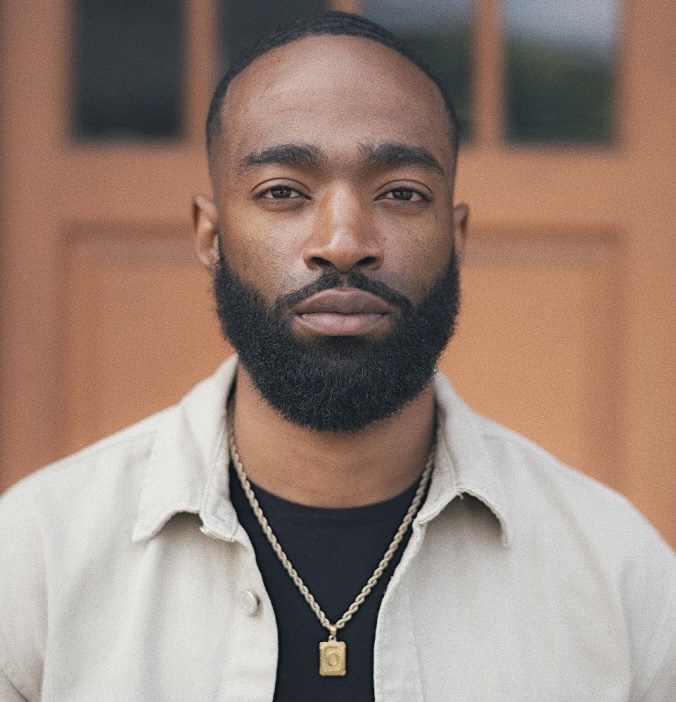
Daniel B. Summerhill is an Assistant Professor of Poetry at SCU. His poems and essays have been published widely and he is the author of Divine, Divine, Divine (2021) and Mausoleum of Flowers (2022). Daniel is an Oakland native and the inaugural Poet Laureate of Monterey County, bringing a unique local perspective to the homelessness crisis.
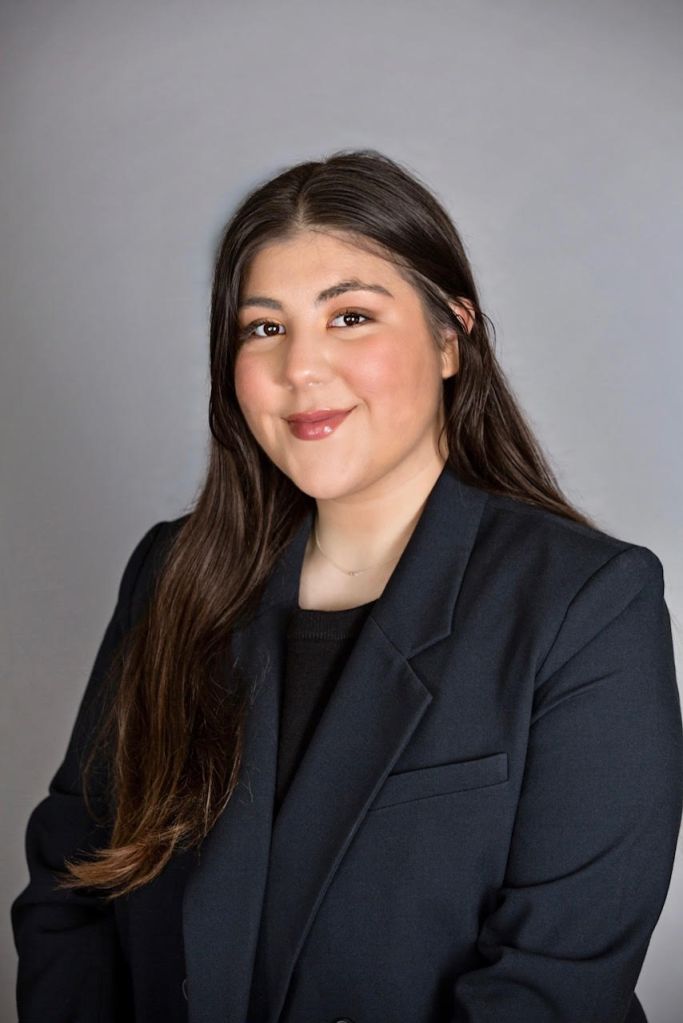
Alexis Takagi is the inaugural Basic Needs Coordinator at SCU. In her role, she helps students access essential resources, such as food, housing and public benefits programs to help them meet their basic needs. Alexis is also a doctoral student in SCU’s School of Education and Counseling Psychology, studying social justice leadership with an emphasis on higher education. Alexis brings a deep understanding of SCU students’ needs and campus connections that help the UI build cross-campus collaborations.
For Alexis’ and Daniel’s full bios, please see our Faculty page.
Honoring Our Unhoused Neighbors
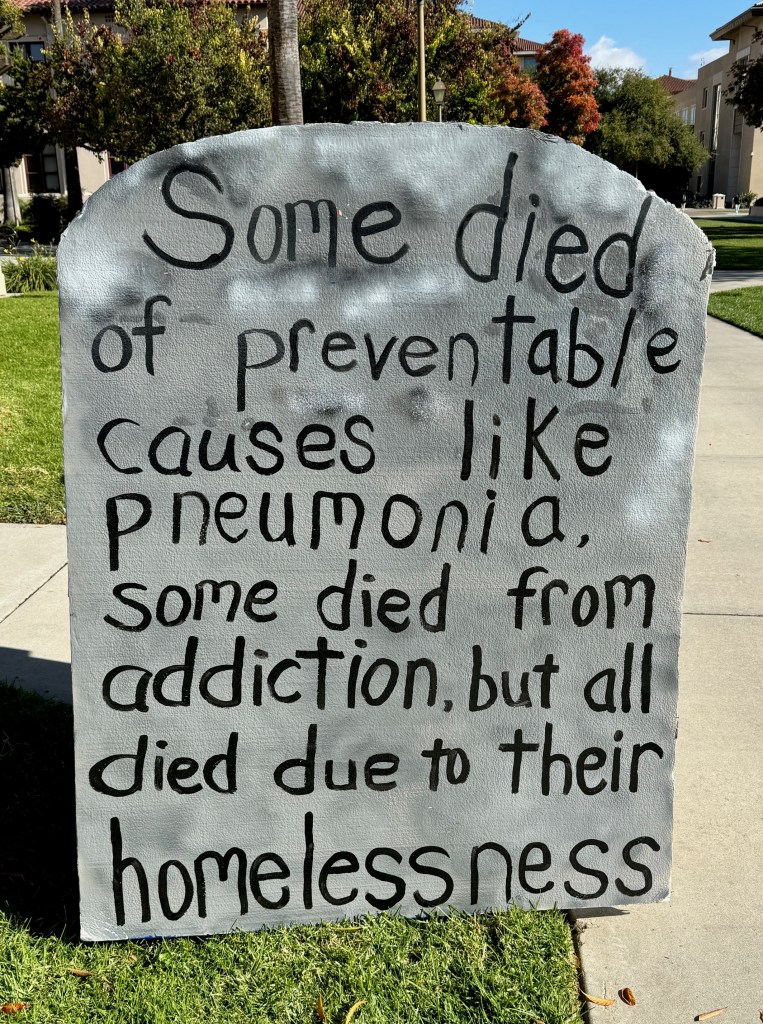
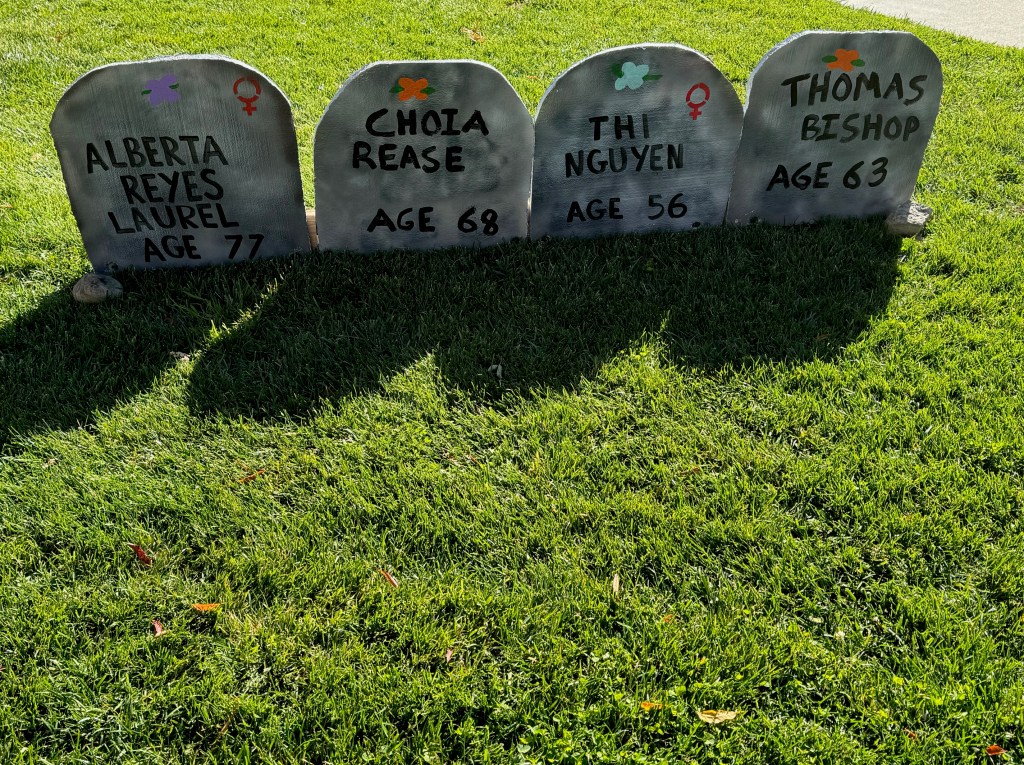
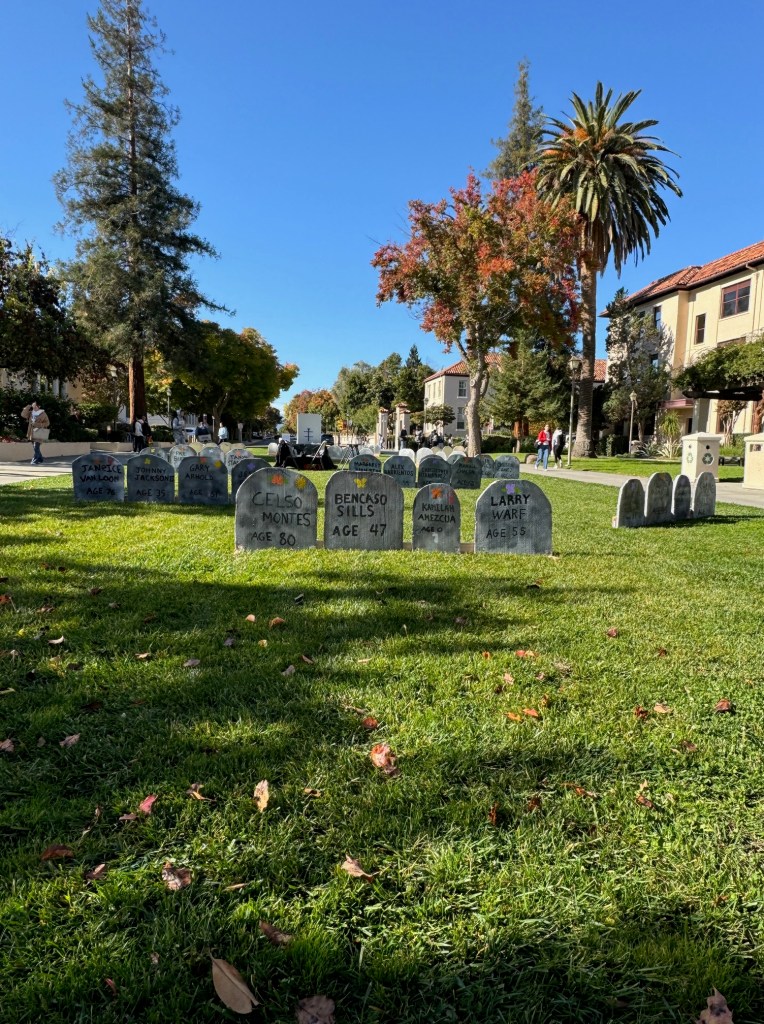
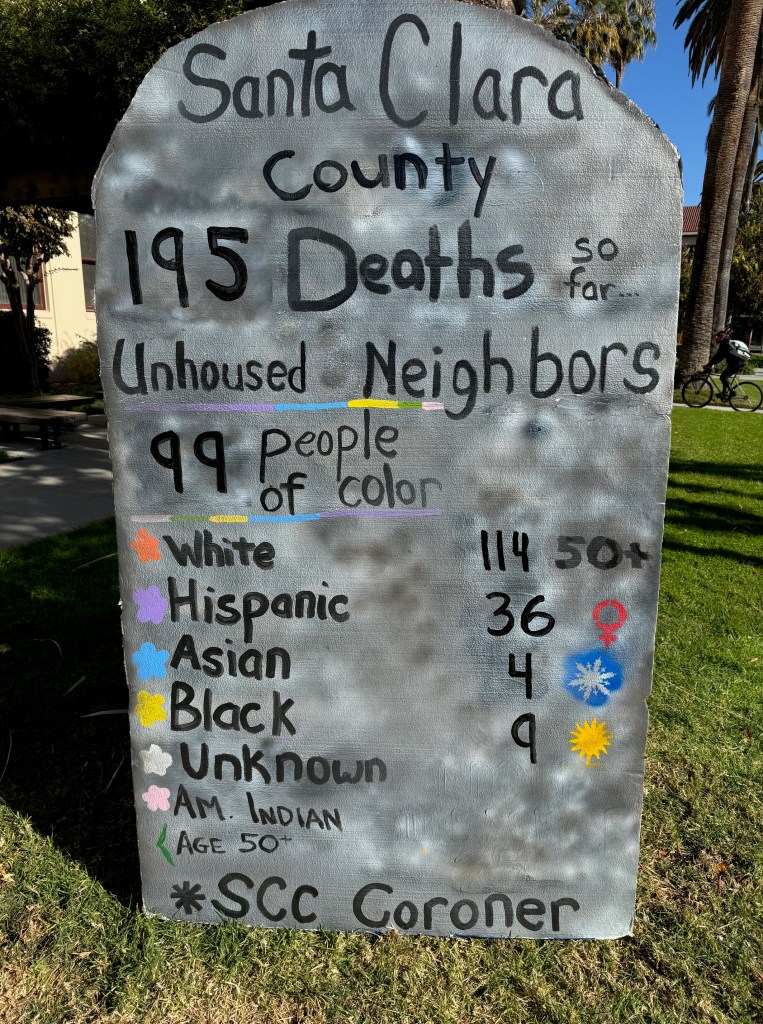
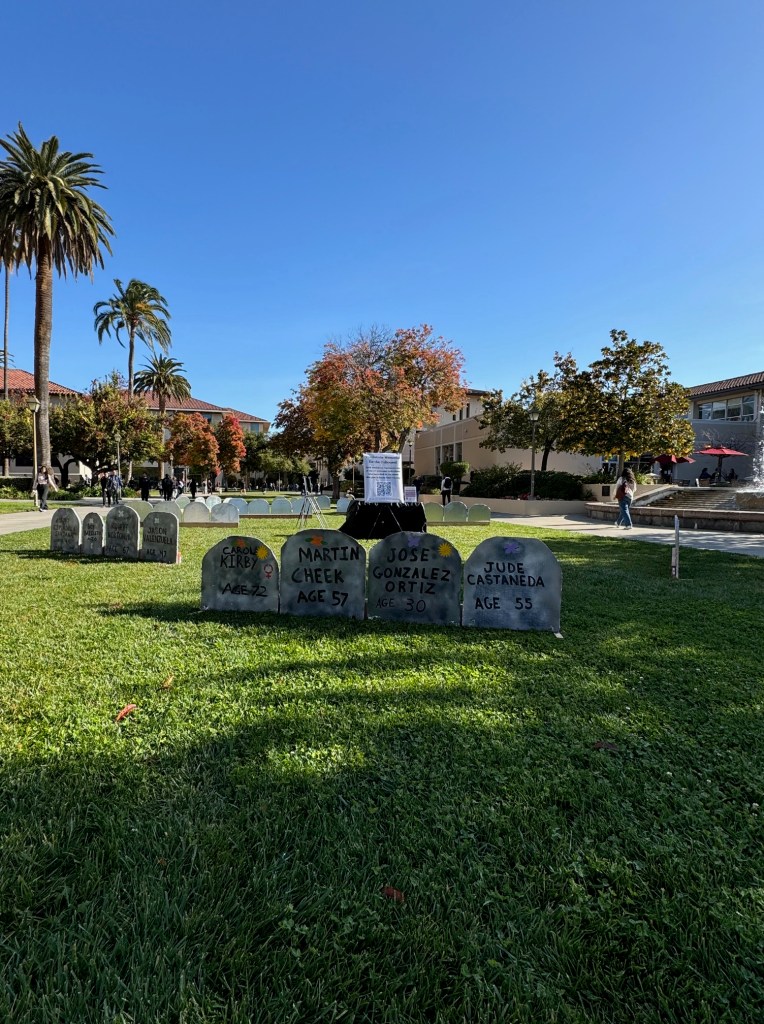
On November 18 and 19, the Unhoused Initiative hosted an outdoor art display of the Tombstone Memorial for our unhoused neighbors who died on the street in Santa Clara County this year. Each year, local activist, Shaunn Cartwright, makes a tombstone for each person who died while homeless in the County. A representative sample of the current 195 deaths this year (as of Nov. 18, 2024) were on the Kenna/Benson lawn to raise awareness on campus about homelessness and homeless mortality. It was also an opportunity to acknowledge the 10th anniversary of the sweep of The Jungle in San Jose – one of the largest encampments in the country at the time.
A noontime panel complemented the tombstone display. The panel discussed homeless mortality and the health and safety impacts of encampment sweeps. It was also a reflection on the sweep of the Jungle in 2014 and the community that resided there. Panelists included Shaunn Cartwright, creator of the Tombstone Memorial project, Robert Aguirre, member of the Gilroy Homeless Union, Todd Langton, Executive Director of Agape Silicon Valley, and Unhoused Initiative faculty member, Professor Boo Riley. The panel was the first in a year-long series examining encampment sweeps, past, present and future.
Click here for more information about the Tombstone Memorial, the Jungle, and our panelists.

Service Opportunity – October 5, 2024
SCU students, faculty, staff and alumni are invited to attend a day of service for our unhoused neighbors. Please read on for more information from the organizers.
Silicon Valley Interreligious Council (SiVIC), Agape Silicon Valley, & Jain Center of Northern California invites you a special distribution; The 11th Annual Supplies & Meal Distribution to be held on Saturday, October 5, 2024.
We will be delivering much needed supplies, food and water. 10 advocacy groups will team up to deliver 500 hot meals, 100’s of tents, sleeping bags and other key essentials help our friends, family and neighbors experiencing homelessness prepare for winter.
When: Saturday, October 5th, 11 AM
Where: 2315 Canoas Garden Ave, San Jose, CA 95125 (Cathedral of Faith Church back parking lot)
We need your help and compassion!
Sign up to help here: https://docs.google.com/forms/d/e/1FAIpQLScox2WnYilhB5pyuEaeswJaGbgQZyzQNxTDMdzWI20dvVIcMA/viewform
UI Affiliates Honored at CAS Convocation
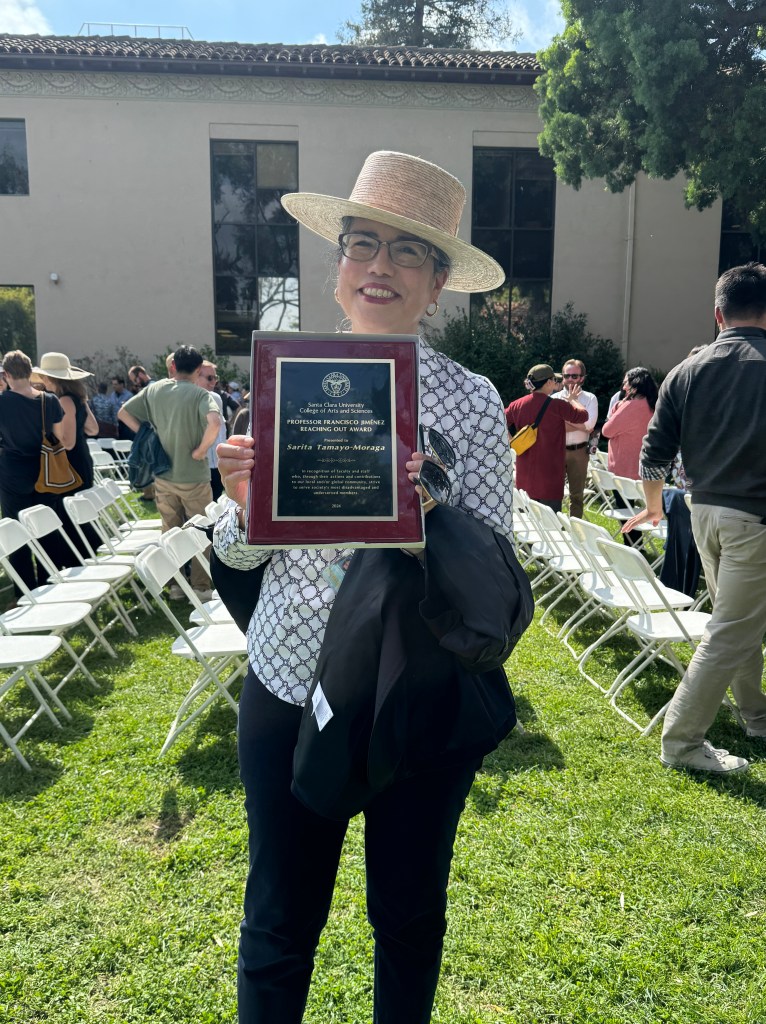
On Tuesday, September 17th, SCU’s College of Arts & Sciences held their Convocation and Awards to kick-off the 2024-25 academic year. Two UI-affiliated faculty received College Awards at the event.
UI Faculty alum, Sarita Tamayo-Moraga, received the Prof. Francisco Jimenez Reaching Out Award in recognition of her dedication to the local community and serving society’s most disadvantaged and underserved members. In particular, Sarita was selected for her commitment to our unhoused neighbors and her collaboration with the mobile showers program through Catholic Charities, Santa Clara County. Sarita has dedicated countless hours to this partnership, providing students with the opportunity to serve at the mobile showers program which provides people experiencing homelessness with a hot shower, clean laundry and other hygiene necessities.
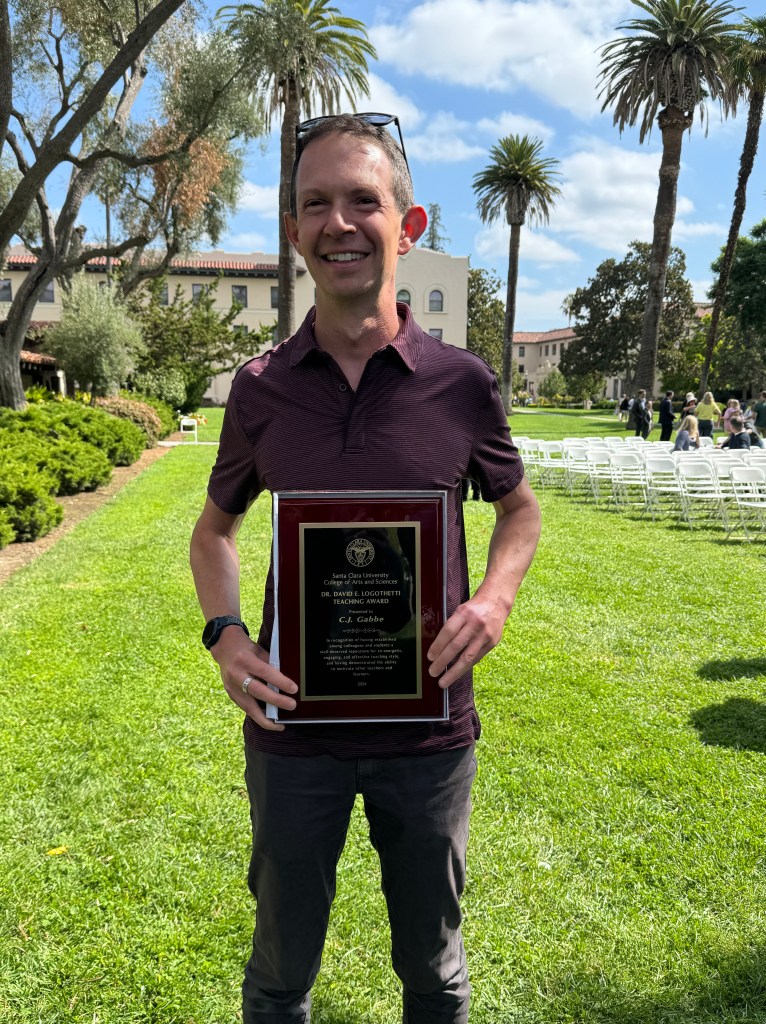
Additionally, current UI Faculty Grant recipient, Prof. CJ Gabbe, received the Dr. David E. Logothetti Teaching Award. The award is given in recognition of having established among colleagues and students a reputation for an energetic, engaging and effective teaching style. In his work with the UI, CJ is currently researching the impacts of the heat index on unhoused populations to inform a network of policies in Santa Clara County.
Congratulations to Sarita and CJ on these well-deserved awards!
SCU Hackworth Fellows Focus on Homelessness

A priority of the UI is to support and promote the work of SCU faculty, staff and students related to the homelessness crisis. This summer, two Hackworth Fellows at SCU’s Markkula Center for Applied Ethics published articles related to the unhoused.
Chisomaga Nlemigbo, SCU ’25, focused his article on indigenous homelessness, ethics and tribal law. Through a comparison of indigenous and non-indigenous court cases, Chisomaga examines the unique experience of being unhoused and indigenous, and how the intersection of colonization and the indigenous meaning of “home” further impact this experience. As he describes, indigenous courts apply concepts of “home” as more than a commodity – it is a place for learning, spiritual grounding and community connection. Chisomaga writes:
“When looking at cases from Indigenous American tribes and nations, a clear regard for the person as a valid and important part of the community is expressed. Indigenous responses take the time to acknowledge the inherent dignity of individuals regardless of their position in society. This is seen most prominently through active governments that consistently seek restorative forms of justice, strive for fairness, build community, and consider the special circumstances of situations. Conversely, cases from the non-Indigenous American legal system reflect the individualistic ideals that are emphasized in its society.”
Chisomaga’s full article is available on the Markkula Center’s website.
In her paper, SCU ’24 grad, Kinsey Hall, notes the recent US Supreme Court decision in Grants Pass v. Johnson which allows cities to criminalize sleeping outside, asking: Even if legally we may criminalize the unhoused, should we do so as a matter of ethics? Noting “that there are a multitude of moral options and a great deal of moral complexity involved in thinking about criminal policy regarding homelessness,” Kinsey applies various ethical frameworks to responses to the homelessness crisis; including, examining San Jose Mayor Matt Mahan’s “safe sleeping” sites. She advocates for a “return to moral thinking” in the creation and application of policies impacting our unhoused neighbors.
You can read the full article on the Markkula Center’s website.
ProPublica looking for feedback from people experiencing homelessness.
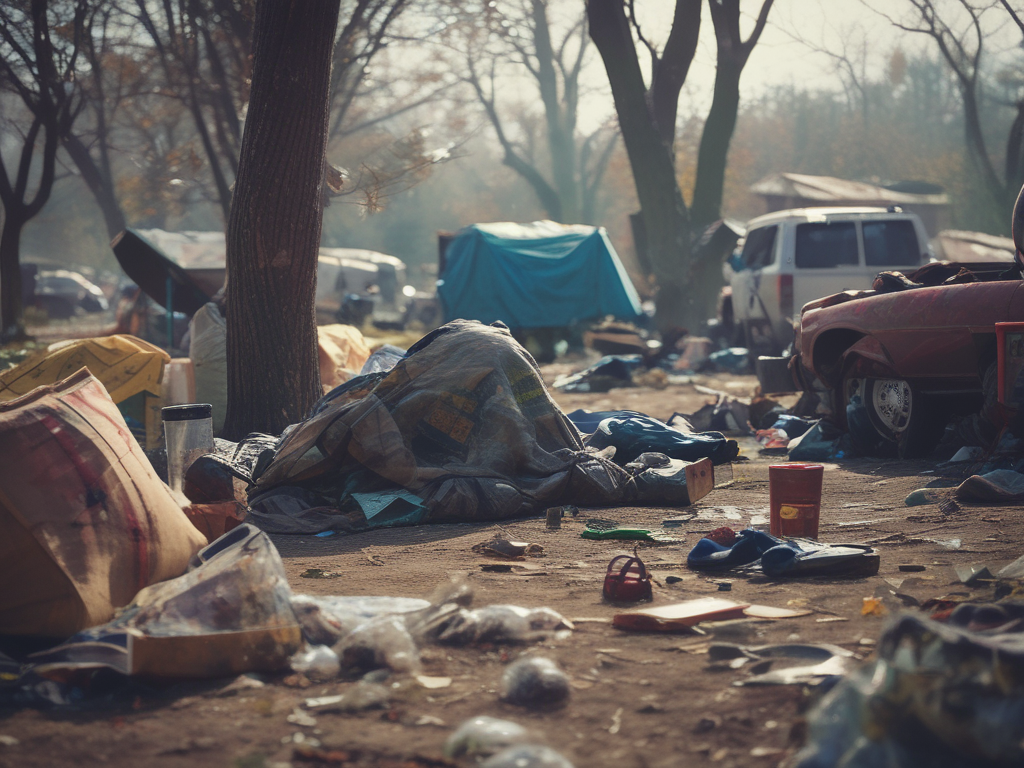
The non-profit news organization, ProPublica is collecting stories from people who have experienced encampment sweeps (also known as “abatements” or “clean-ups”). They are investigating what happens when local agencies or authorities take belongings from people experiencing homelessness during a sweep; what are the impacts of losing an ID, medication, tents and family photos?
Reporters would like to hear from “people who have experience with having a belonging taken during a sweep, and people with insight into this issue, including front-line workers or volunteers, city contractors, researchers or regulators.”
More information about the project is available here.
Follow us on Instagram!
The Unhoused Initiative is now on Instagram. Be sure to follow us @Unhoused_Initiative_SCU for the latest news and updates related to the UI, housing and homelessness.
 The Unhoused Initiative at SCU